
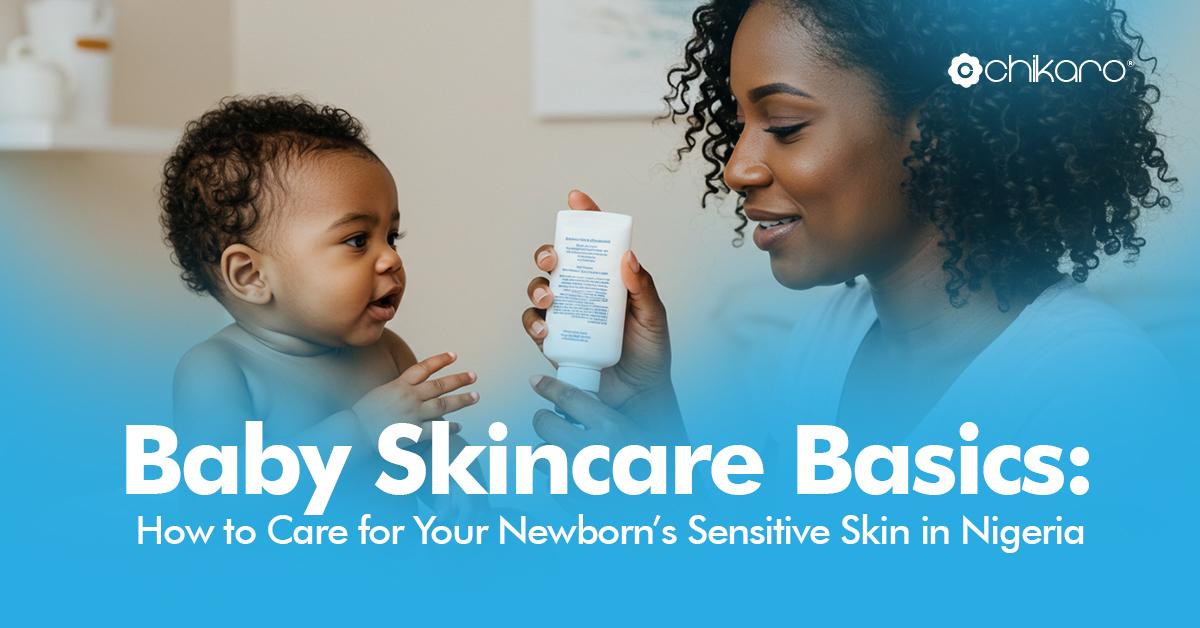
Baby Skincare Basics: How to Care for Your Newborn's Sensitive Skin in Nigeria
Your baby's skin is soft, sensitive, and still adjusting to life outside the womb — it's about 30% thinner than adult skin, and their immune system is still developing, so rashes and small bumps are common. Nigeria's mix of heat, humidity, dust, and harmattan can make newborn skincare feel trickier than it needs to be, but with the right routine, most of it is easy to manage.
Common Skin Issues and What Helps
Heat rash shows up as small red bumps on the neck, back, and armpits, caused by blocked sweat glands in hot weather. Dress your baby in lightweight cotton, bathe with lukewarm water, and a light dusting of cornstarch-based baby powder helps — avoid talc.
Dry skin and peeling is normal in the first few weeks, and harmattan or air conditioning can make it worse. Unscented baby lotion or coconut oil after a bath helps, and there's no need to over-bathe — 3–4 times a week is enough in cooler weather.
Cradle cap appears as yellowish, flaky patches on the scalp — it's not painful or itchy. Baby oil applied before a bath, followed by a gentle brush with a soft comb, along with washing hair with a mild baby shampoo 2–3 times a week, usually clears it over time.
Baby acne — small white or red bumps, often on the cheeks — is caused by leftover pregnancy hormones. Cleanse gently with warm water, skip adult products or scrubbing, and it typically clears on its own within a few weeks.
Nappy rash comes from prolonged contact with a wet or soiled diaper. Frequent diaper changes, a zinc oxide-based diaper cream, and letting your baby go without a diaper for a bit when you can all help it heal.
A Simple Daily Routine
In the morning, wipe your baby's face and neck folds with lukewarm water, and moisturise with a baby lotion or oil, especially during harmattan. Bath time — once daily or every other day — is best with a mild, fragrance-free soap, kept short (5–10 minutes max), patting the skin dry rather than rubbing. At night, reapply lotion if the skin feels dry, and a gentle massage can help with both sleep and bonding.
What to Look For in Products
Favour hypoallergenic, fragrance-free formulas, natural oils like coconut oil or shea butter, and pH-balanced cleansers and shampoos. Steer clear of strong scents, alcohol-based wipes, and adult creams or powders — baby skin doesn't need anything adult skincare was designed for.
Adjusting for Nigeria's Weather
In hot weather, bathe a little more often if your baby is sweating, keep rooms well-ventilated, and stick to light cotton sheets and clothing. During harmattan, moisturise more frequently, use a humidifier or a bowl of water in the room, and keep lips and cheeks protected with a gentle balm.
When to Call the Doctor
Seek medical advice if a rash spreads rapidly or forms blisters, your baby seems uncomfortable, itchy, or in pain, a fever accompanies the skin issue, or there's no improvement after 3–5 days of gentle care.
Newborn skin isn't ever perfect, and that's completely normal — most rashes and dryness clear up on their own with time and gentle care. Keep the routine simple, safe, and soothing, and your baby's skin will settle into its own rhythm.
Frequently Asked Questions
How do I treat heat rash on a baby in Nigeria?
Dress your baby in lightweight cotton, bathe with lukewarm water, and use a light dusting of cornstarch-based baby powder — avoid talc. Heat rash is caused by blocked sweat glands and is common in hot weather.
How often should I bathe my newborn?
Newborns don't need daily baths — 2–3 times a week is enough. Over-bathing can dry out the skin, especially during harmattan.
Is baby acne something to worry about?
Usually not — small white or red bumps on the cheeks, caused by leftover pregnancy hormones, typically clear on their own within a few weeks with gentle cleansing alone.