
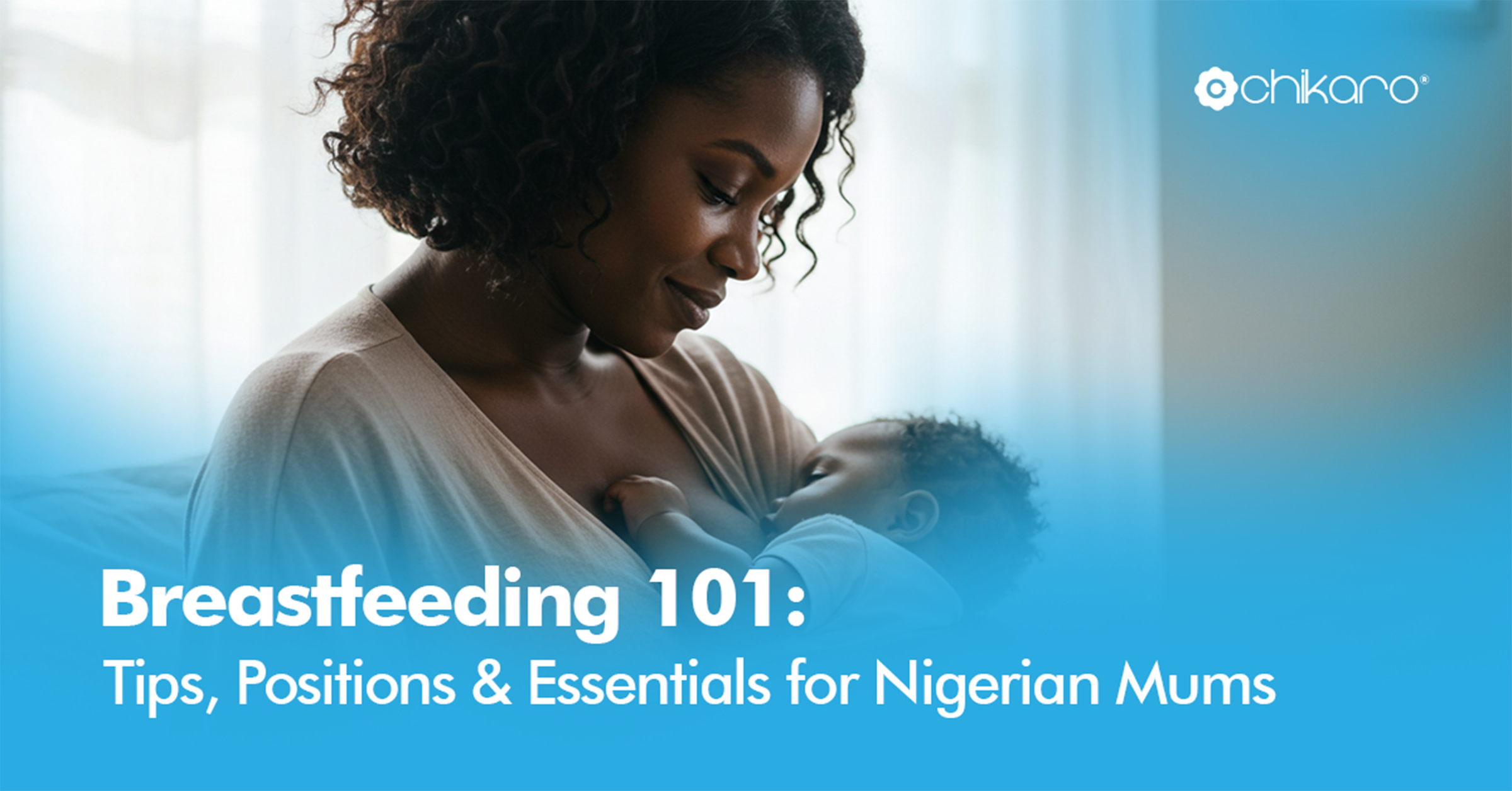
Breastfeeding 101: Tips, Positions & Essentials for Nigerian Mums
Breastfeeding is natural, but that doesn't mean it's always easy. Latching struggles, sore nipples, and other bumps in the road catch a lot of new mums off guard. With the right information and a bit of patience, most of it gets easier — breast milk carries all the nutrients your baby needs, strengthens their immunity, and lowers your own risk of certain cancers, which is why exclusive breastfeeding for the first 6 months is recommended in Nigeria.
Common Challenges — and What Helps
A poor latch is one of the most common early struggles. Try a few different positions, and make sure your baby's mouth covers most of the areola, not just the nipple.
Sore nipples respond well to nipple cream or a little breast milk rubbed in after each feed, followed by air-drying rather than covering up right away.
Low milk supply often improves with better hydration, lactation-friendly foods like oats, pap, or moringa, and feeding more frequently — pumping between feeds can help build supply too.
Engorgement or blocked ducts tend to respond to warm compresses before feeding, cold packs afterward, and gentle massage.
Positions Worth Knowing
The cradle hold is the most common — baby's head rests in the bend of your elbow. The cross-cradle hold is a useful variation for newborns or babies who are struggling to latch. The football hold (tucking baby under your arm like a football) works well after a C-section or if you have larger breasts. And the side-lying position is ideal for night feeds when you'd both rather stay lying down. Whichever position you use, keep your baby's tummy facing yours.
Essentials Worth Having
A few things make the day-to-day easier: nursing bras, a nursing pillow, and nipple cream for support and soreness, breast pads to absorb leaks, burp cloths to protect your clothes, and — if you're expressing or combo-feeding — a breast pump and a set of feeding bottles.
Breastfeeding in Public
A breathable nursing cover or scarf and nursing-friendly clothing make feeding out and about far more comfortable. Most places have a quiet corner or mother's room if you'd rather step aside — but there's no need to feel self-conscious either way. Your baby's hunger matters more than anyone else's opinion.
When to Ask for Help
It's worth speaking to a lactation consultant or your healthcare provider if your baby isn't gaining weight, you're in constant pain, your nipples are cracked or bleeding, or your milk hasn't come in after about 5 days. None of these are things to just push through alone.
Breastfeeding has a real learning curve, and that's normal — it doesn't mean something's wrong. With the right information, a support system, and a little trial and error, most mums and babies find their rhythm.
Frequently Asked Questions
How long should I exclusively breastfeed?
Exclusive breastfeeding for the first 6 months is recommended in Nigeria, providing all the nutrients your baby needs and strengthening their immunity.
What causes low milk supply and how do I fix it?
Low supply often improves with better hydration, lactation-friendly foods like oats, pap, or moringa, and feeding more frequently — pumping between feeds can also help build supply.
What's the best breastfeeding position for a C-section recovery?
The football hold — tucking your baby under your arm like a football — keeps their weight off your incision and works well for larger breasts too.